
Work life, personal life: why you need to separate your digital usage
Using your work phone to order sushi, replying to Slack on a family Sunday... these habits seem harmless, but they expose you to real risks: cybersecurity vulnerabilities, personal data surveillance, burnout, and legal risks. Separating your professional and personal digital habits isn't a constraint: it's a strategy for self-protection and company protection. Here's why — and how to take action.
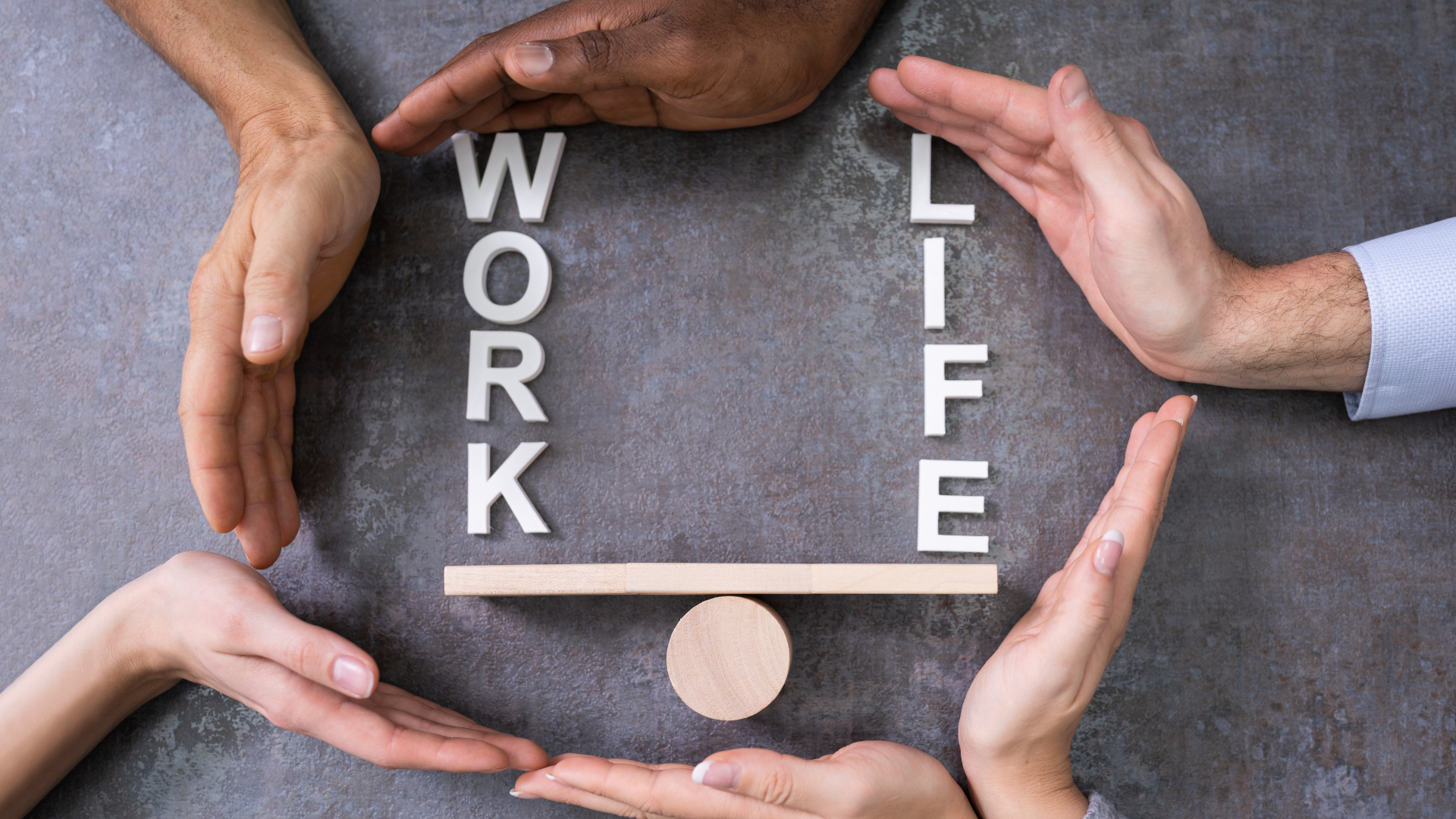
We all have this same image in mind: that Sunday afternoon, with family, where a simple Slack notification breaks the magic of the moment. Or that work smartphone used to order sushi in the evening.
It has become the norm, almost a mark of dedication. We call it "fluidity." I prefer to call it an invisible peril. By mixing our professional and personal digital habits, we're not just chipping away at our available mental bandwidth: we are endangering our security, our privacy, and, even more seriously, the very meaning of our actions.
The "All-in-One" Illusion: when convergence becomes a trap
We were sold device convergence as the pinnacle of modernity. "One phone to manage everything, it's simpler!"
Certainly, it's lighter in your pocket. But mentally? It's a constant mental load. Using personal tools for work, or vice-versa, creates a blurred line where you no longer know which "hat" you're wearing.
This apparent simplification is a trap. Separating your digital habits means restoring a physical and symbolic boundary to our days. It's deciding that my work computer is the tool for my added value, and my personal tablet is the space for my freedom. Without this distinction, work creeps in everywhere, and rest is never truly rest.
Privacy and cybersecurity: your personal data is not a company asset
Let's be frank: your employer doesn't need to know you're looking for allergy treatment or downloading dating apps in your free time. Yet, by using a work device for your personal life, you expose your personal data to the company's monitoring tools.
Conversely, "Bring Your Own Device" (BYOD) is a cybersecurity nightmare:
- For work: your vacation photos shouldn't be mixed with confidential client files. Malware hidden in a free mobile game can become the entry point for ransomware that will cripple your company
- For personal use: in case of loss or theft, if your company needs to remotely wipe data to protect its secrets, it will also erase your family memories
The tangible risks of digital blending
Failing to maintain this digital separation carries very real, often underestimated, risks.
Legal risk: your private communications in legal proceedings
In the event of a dispute, your personal communications could end up in legal proceedings if devices are mixed.
Burnout risk: the inability to truly disconnect
The inability to truly "unplug" leads to silent burnout. The right to disconnect is not just a line in the labor code; it's a biological necessity.
Loss of quality and meaning at work
When you're dealing with a work email between two Instagram stories, how much attention are you really giving to the core issue? We lose quality, relevance, and ultimately, meaning.
Restoring purpose to digital tools to protect people
Ultimately, separating your uses is a question of value. What value do you place on your downtime? What value do you place on the integrity of your company's data?
Disciplining yourself to only open Slack on a dedicated device is an act of benevolent resistance. It's telling yourself: "Here, I create value. Elsewhere, I build myself as an individual."
Simplifying your digital life isn't about merging everything. On the contrary, it's about putting each tool in its place so that technology remains at the service of our lives, and not the other way around.
5 practical steps to compartmentalize your work and personal activities
No need to revolutionize everything in one day. The idea is to re-establish healthy habits so that your brain finally knows when it's "at the office" and when it's "at home."
- Separate devices or profiles: ideally, have two phones. If that's not possible, use the "Work Profile" feature (Android) or "Focus Modes" (iOS) to hide work apps after 6 PM
- A thorough messaging app cleanup: uninstall Slack, Teams, or LinkedIn from your personal phone. If you absolutely must keep them, systematically turn off push notifications
- Password isolation: never store your personal passwords in your professional browser's password manager. Use an independent solution (like Bitwarden or Dashlane) to keep the two vaults separate
- The 'sacred' charger: don't charge your work phone on your nightstand. The mere fact that it's physically in another room radically changes your sleep quality and anxiety levels
- Browser discipline: on your personal computer, use two different browsers (e.g., Chrome for personal, Firefox for professional). This prevents mixing histories, cookies, and avoids errors when sending sensitive files
Digital balance is not a luxury; it's a survival strategy in a hyperconnected world. By compartmentalizing your usage, you don't become less efficient; you become freer.
FAQ - separating digital usage
Can my employer monitor my personal phone if I access my professional emails on it?
If you have installed a management solution (MDM) to access your work emails on your personal mobile device, the company may sometimes see your app list, locate the device, or wipe it remotely. For web browsing, if you use the company's VPN, all your traffic is theoretically visible to the network administrator.
Isn't having two phones the opposite of simplification?
It's a mental simplification. Carrying two devices adds a few extra grams, but it frees up pounds of cognitive load. When you put down your work phone on Friday evening, you truly "close" the office door. It's an essential physical ritual for the brain.
What are the risks if I download a personal file onto my work computer?
Beyond the risk of viruses (cybersecurity), you create legal ambiguity. Anything found on a work tool is presumed to be professional. In the event of a contentious departure or an audit, your private documents (bank statements, photos, contracts) could be legally accessed by your employer.
Is the right to disconnect truly applicable in the workplace?
It's a right, but it's primarily a shared responsibility. By sending emails on the weekend, you impose invisible pressure on your colleagues. Separating your digital usage also means respecting others' time and valuing the quality of work produced during dedicated hours.